
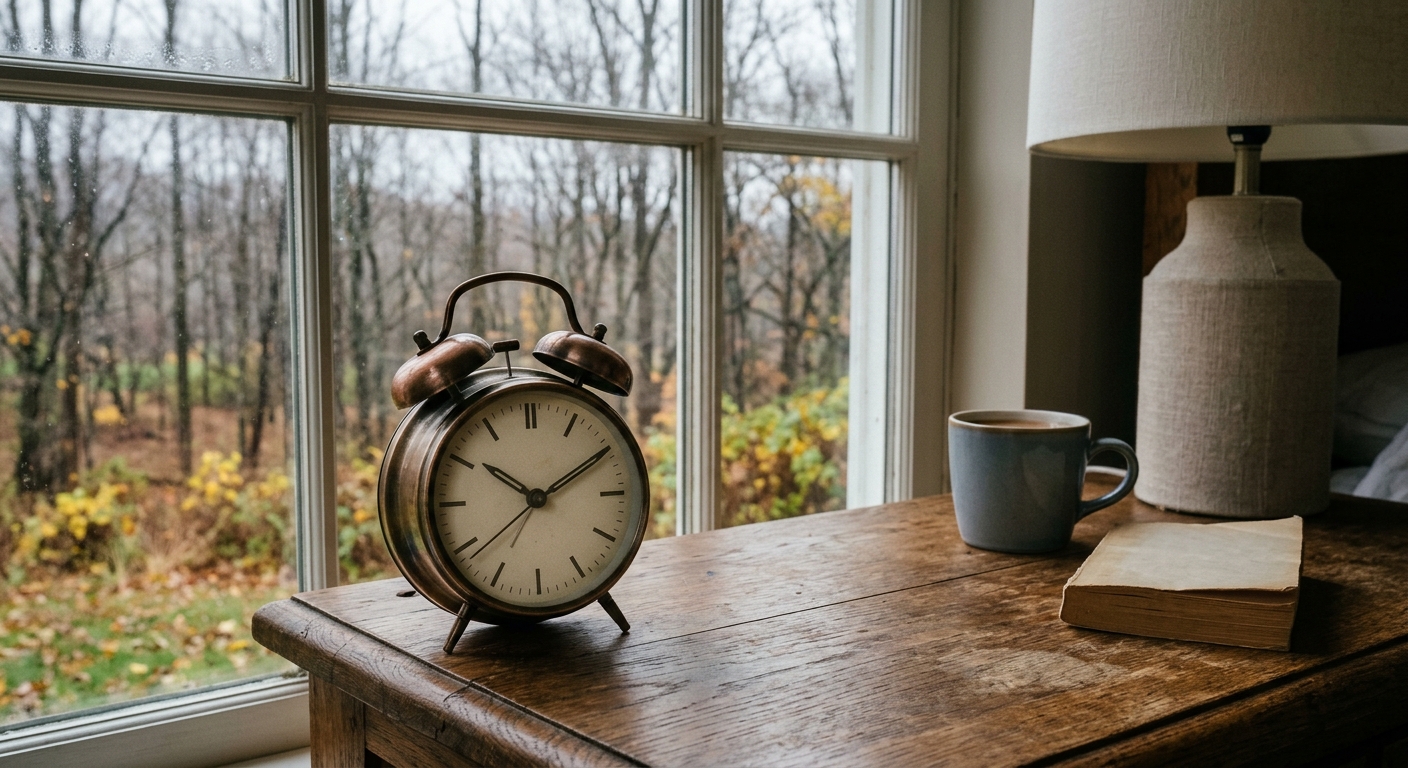
AI-generated illustration; not a photograph of the reported event.
- calendar_today October 29, 2026
Ontario Prepares for the End of Daylight Saving Time
Most Ontario residents will set their clocks back one hour at 2 a.m. on Sunday, Nov. 1, marking the end of daylight saving time and a return to standard time until March. This customary adjustment offers an extra hour of sleep but arrives amid an evolving patchwork of time practices across Canada, as provinces and territories make decisions about the future of seasonal time changes.
Impact of Turning Back the Clocks
The end of daylight saving time means earlier sunrises and sunsets for Ontarians. On Oct. 29 in Toronto, the sun rose at about 7:49 a.m. and set at 6:12 p.m. After the clocks change, sunrise on Nov. 1 is expected around 6:53 a.m., with sunset at 5:08 p.m. This shift is especially noticeable for those accustomed to starting their day with daylight.
Where the Clocks Are Changing
The Ontario time change affects most of the province, including Toronto and Ottawa. Other areas making the seasonal adjustment include Quebec, Nova Scotia, New Brunswick, Prince Edward Island, Newfoundland and Labrador, and the majority of Nunavut. However, the uniformity ends as several jurisdictions opt for permanent daylight saving or standard time.
Time Change Provinces Moving Away from the Practice
- Northwestern Ontario: Parts of this region will remain on permanent daylight saving time, having moved away from seasonal changes to reduce disruptions for businesses, residents, and Indigenous communities.
- British Columbia: The provincial government adopted permanent daylight saving time in March, ending seasonal adjustments. Clocks will not be set back this fall, a change intended to improve quality of life by providing a more stable schedule and extra daily daylight.
- Alberta: Alberta now observes "Alberta Time," identical to Mountain Daylight Time (MDT), year-round, eliminating the spring and fall clocks change and aiming to bring more predictability for residents.
- Manitoba and Northwest Territories: Both regions announced in September the move to permanent time, following significant public support in Manitoba and a government decision in the Northwest Territories, meaning no time adjustment this November.
- Saskatchewan and Yukon: Both have already adopted year-round non-changing time practices, and will not be resetting clocks.
The Status of Quebec Time Change
This November may mark the last time Quebec residents need to adjust their clocks. On Oct. 28, Premier Paul St-Pierre Plamondon revealed that the province is considering ending the seasonal time change in 2025, following years of advocacy by the Parti Québécois. In a post on X, he cited health impacts and adaptation challenges for children associated with changing clocks, stating the government would consult with specialists before deciding whether to stay on daylight saving time or standard time.
Variation in Time Practices Across Canada
Canada is witnessing a transition in how provinces and territories observe time. The decision to maintain or end seasonal time changes, like the daylight saving time practice, varies by location:
- Daylight saving time resumes in standard form in most eastern provinces and parts of central Canada.
- Permanent time—either standard or daylight saving— is being adopted by more western provinces and territories such as British Columbia, Alberta, Manitoba, the Northwest Territories, Saskatchewan, Yukon, and parts of northwestern Ontario.
Looking Ahead
While most Ontarians, including those in Toronto, will adjust their clocks on Nov. 1, the move away from seasonal time changes is underway in many other parts of Canada. The conversation about whether to retain or end daylight saving time continues, with provinces like Quebec considering similar steps in the near future. For this year, Ontario residents can expect the usual routine: a return to standard time, with clocks set back one hour until spring arrives.
Source: nowtoronto.com.


