
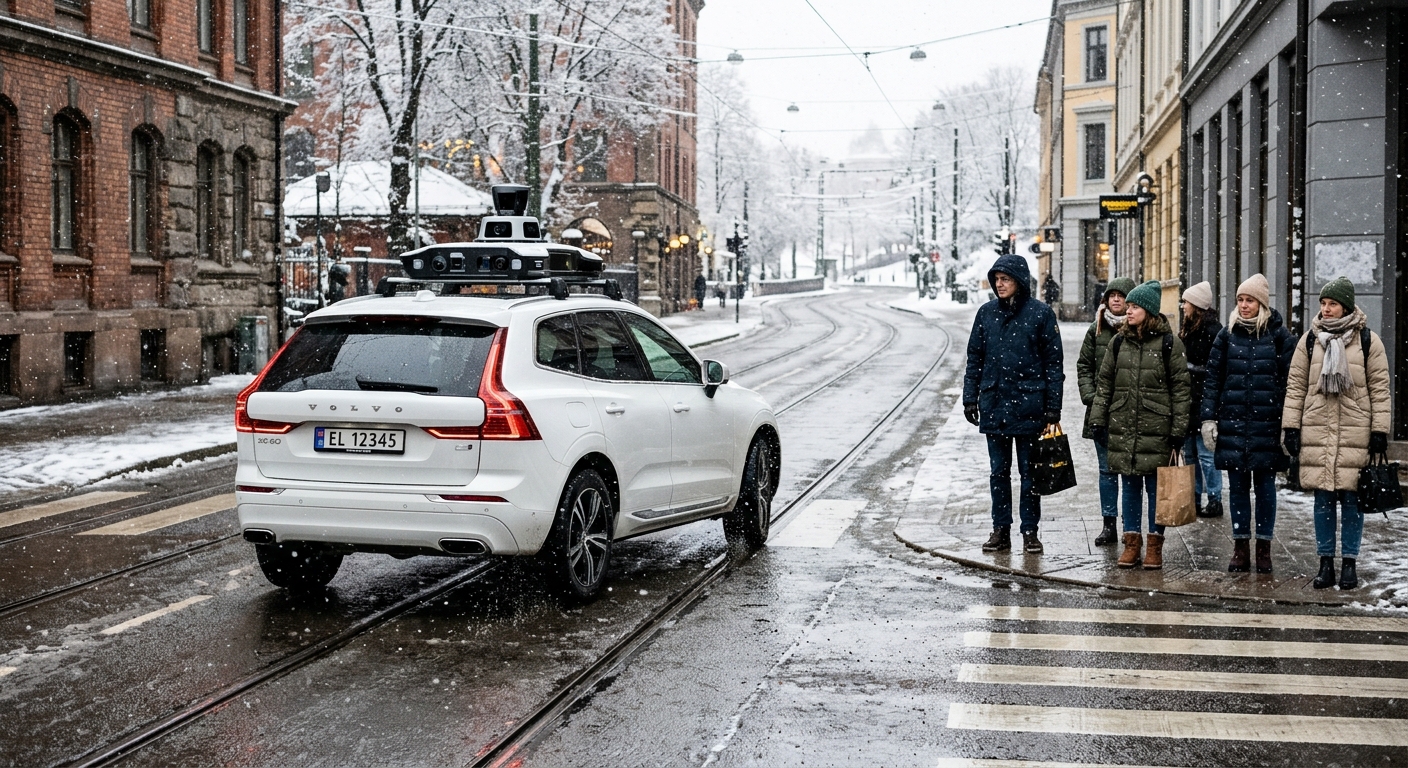
AI-generated illustration; not a photograph of the reported event.
- calendar_today November 17, 2026
Waymo's Self-Driving Taxi Ambitions Face Toronto Hurdles
Autonomous vehicle company Waymo has unveiled plans to launch its self-driving taxi service in Toronto by 2028, with current testing already underway across the city's streets. However, polling suggests Torontonians harbour significant reservations about the deployment of driverless vehicles in their city.
Poll Shows Public Concerns Over Waymo Launch
According to new data collected by Liaison Strategies, only 36 per cent of surveyed Toronto residents think Waymo should be allowed to launch paid, driverless rides in the city. A substantial majority—62 per cent—indicated they would not be likely to use a Waymo service, and just 11 per cent said the company should start the service without reservations.
David Valentin, principal at Liaison Strategies, commented, “We're not seeing results that would be encouraging if you're Waymo.” He highlighted the low support for the company’s next-phase deployment.
Ongoing Testing and Planned Service Expansion
Waymo began testing its autonomous vehicles in Toronto in mid-October 2026, focusing initially on mapping the city’s streets with trained human safety drivers behind the wheel. The company's stated goal is to eventually roll out a full-scale, fully autonomous ride-hailing service across the city, applying a "rigorous, phased, safety-first approach" that mirrors its operations in 15 U.S. cities.
"Techlash" and Hesitancy Toward Big Tech
Matti Siemiatycki, Professor of Geography and Urban Planning at the University of Toronto, noted that Waymo’s expansion comes amid a broader period of public skepticism toward large technology firms—a phenomenon he described as a "techlash." He attributes public unease to prior concerns over data centres, artificial intelligence, and the impacts of technology on the job market.
Siemiatycki remarked, “I think Torontonians are really in a ‘show me’ type of mood when it comes to big tech and putting any faith in their products.”
Preference for Limited Pilots, Not Full Rollout
The Liaison poll revealed an appetite among residents for a smaller, limited pilot program restricted to a specific area, rather than a city-wide service. Yet, Waymo has indicated its ultimate intentions are to provide full-scale autonomous ride-hailing over time.
Winter and Road Safety Top List of Concerns
Winter driving in Toronto, as well as road safety, notably pedestrian and cyclist safety, were among the predominant concerns revealed in the Liaison polling. Of those surveyed, 24 per cent identified harsh winter conditions as their primary worry, while 22 per cent cited pedestrian and cyclist safety. Additional anxieties included potential negative impacts on taxi and ride-hailing driver livelihoods (12 per cent).
Michael Longfield, executive director of Cycle Toronto, voiced doubts about integrating more autonomous vehicles into Toronto’s busy roads, suggesting, “Adding more cars to an already clogged roadway network is not going to make traffic move any better.”
Professor Siemiatycki also noted uncertainties around how driverless cars would interact with the city's complex downtown streetcar infrastructure.
Officials Respond to Waymo's Toronto Presence
While Toronto Mayor Olivia Chow emphasized the need for strong regulations on autonomous vehicles, she acknowledged that such powers currently lie with Ontario’s provincial government. Ontario Transportation Minister Prabmeet Sarkaria publicly shared excitement over Waymo’s entry and potential for expansion across the province.
Waymo's Approach and Polling Details
Waymo has emphasized that its "all-weather" systems are designed to complement Toronto’s transportation networks, including cycling lanes and public transit. The Liaison Strategies poll surveyed 1,000 Toronto residents on November 14 and 15, 2026, using interactive voice recordings. Results were weighted according to the 2021 Census and carry a margin of error of +/- 3.1 percentage points, 19 times out of 20.
Source: cbc.ca.


