- calendar_today August 21, 2025
.
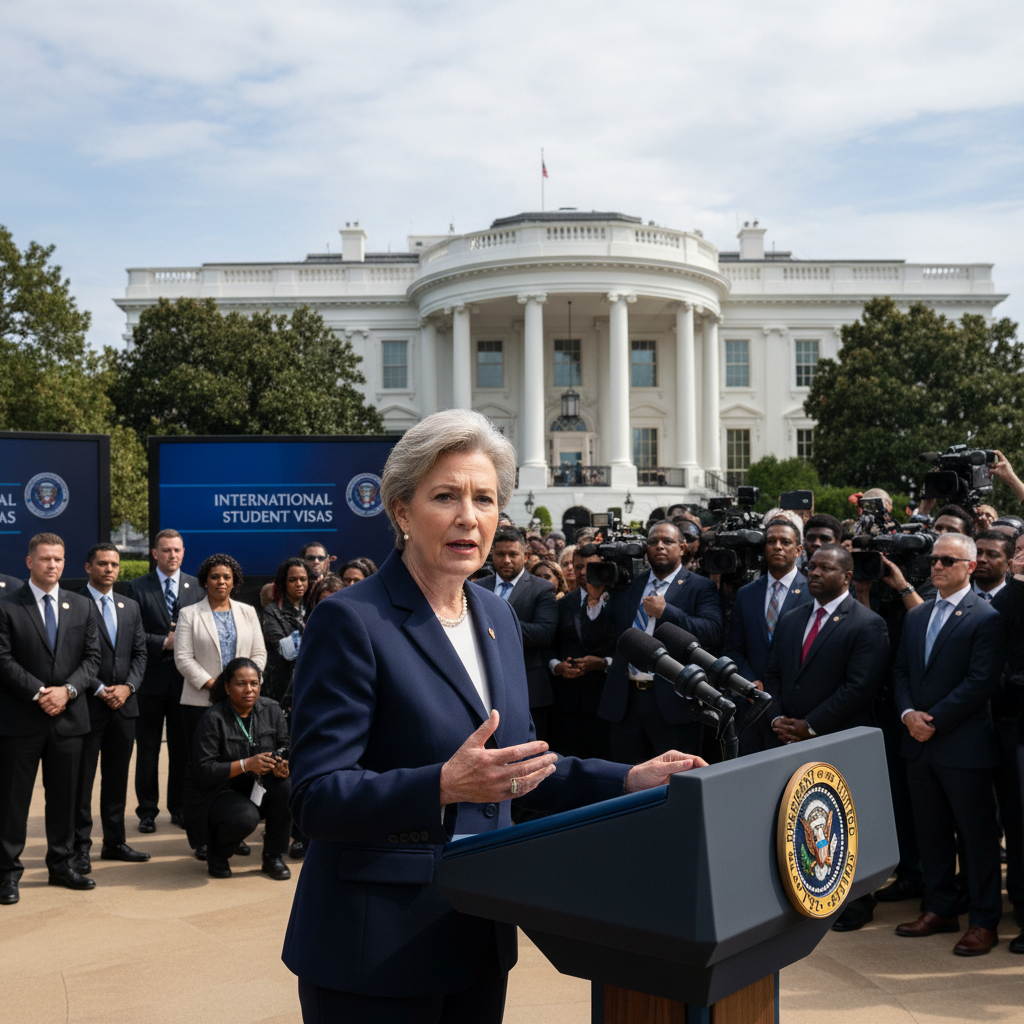
Former President Donald Trump said on Monday that the U.S. would accept 600,000 Chinese students to attend American colleges. The announcement comes in the middle of the recent months of escalation between the two countries over tariffs and other trade measures.
Trump, who made the comments while standing outside the White House, has recently imposed a nearly 145 percent tariff on all Chinese-made goods and threatened to expand on those levies. The move was followed by Beijing, which announced a 125 percent tariff on all U.S. goods.
The series of tit-for-tat levies has raised the possibility of an extended trade war between Washington and Beijing. The two sides have held ongoing trade negotiations this year, agreeing in May to a pause on new tariffs. But in recent weeks, Trump has again discussed potential additional penalties on Chinese goods, including a 200 percent tariff on magnets made in the country.
“We’re going to take a lot of their students. I heard, in certain cases, that we’re not going to accept their students. I don’t want to do that. We’re going to allow them to come in,” Trump said Monday. “It’s very important, 600,000 students. It’s very important. But we’re going to get along with China.”
Trump’s comments come after he recently suggested his administration would refuse to grant visas to Chinese students. His State Department has threatened to “aggressively revoke” visas of Chinese nationals with ties to the Chinese Communist Party and those working in areas of sensitive research.
Universities across the country have raised alarms at the potential of restrictions on visas for Chinese students, who make up a large number of those attending American colleges. Trump, who has previously said he wanted to keep ties with China “open,” seemed to back away from that pledge earlier this month.
“President Trump has always been in favor of allowing Chinese students to come here, and he’ll continue to be,” Trump said at the time. “But it’s very important to us that it’s reciprocal.”
About 270,000 students from China are currently enrolled in colleges across the U.S., so the 600,000 figure represents a more than doubling of that number. A successful expansion of that size would represent a major financial boon to universities across the country, many of which have relied on tuition and other fees from foreign students to stay afloat.
Asked about the prospect of a meeting with Chinese President Xi Jinping on Monday, Trump seemed open to the idea. “I would like to meet him this year,” he said. “We have a good relationship. We need to do that.”
“Right now we have tariffs that are so great that we take in billions of dollars,” Trump added. “And we have a very good relationship economically with China, much better than before, but Biden took it down, right? He just took it down. They just took him to the cleaners.”
Trump also tied his pledge to allow students to Chinese tariffs, though he said that his administration would continue to impose penalties on Beijing. Asked if he was willing to remove some tariffs on Chinese goods in exchange, he demurred.
“Now, I don’t want to take the tariffs off, because we have to be a little bit competitive, but I do think we have a good relationship,” he said. “We do have tariffs in place. It’s a much more important relationship than it was when Biden took over. So it’s a very good relationship.”
“We’re going to take a lot of their students. I heard, in certain cases, that we’re not going to accept their students. I don’t want to do that. We’re going to allow them to come in,” Trump said Monday. “It’s very important, 600,000 students. It’s very important. But we’re going to get along with China.”
Trump’s comments come after he recently suggested his administration would refuse to grant visas to Chinese students. His State Department has threatened to “aggressively revoke” visas of Chinese nationals with ties to the Chinese Communist Party and those working in areas of sensitive research.