- calendar_today August 24, 2025
.
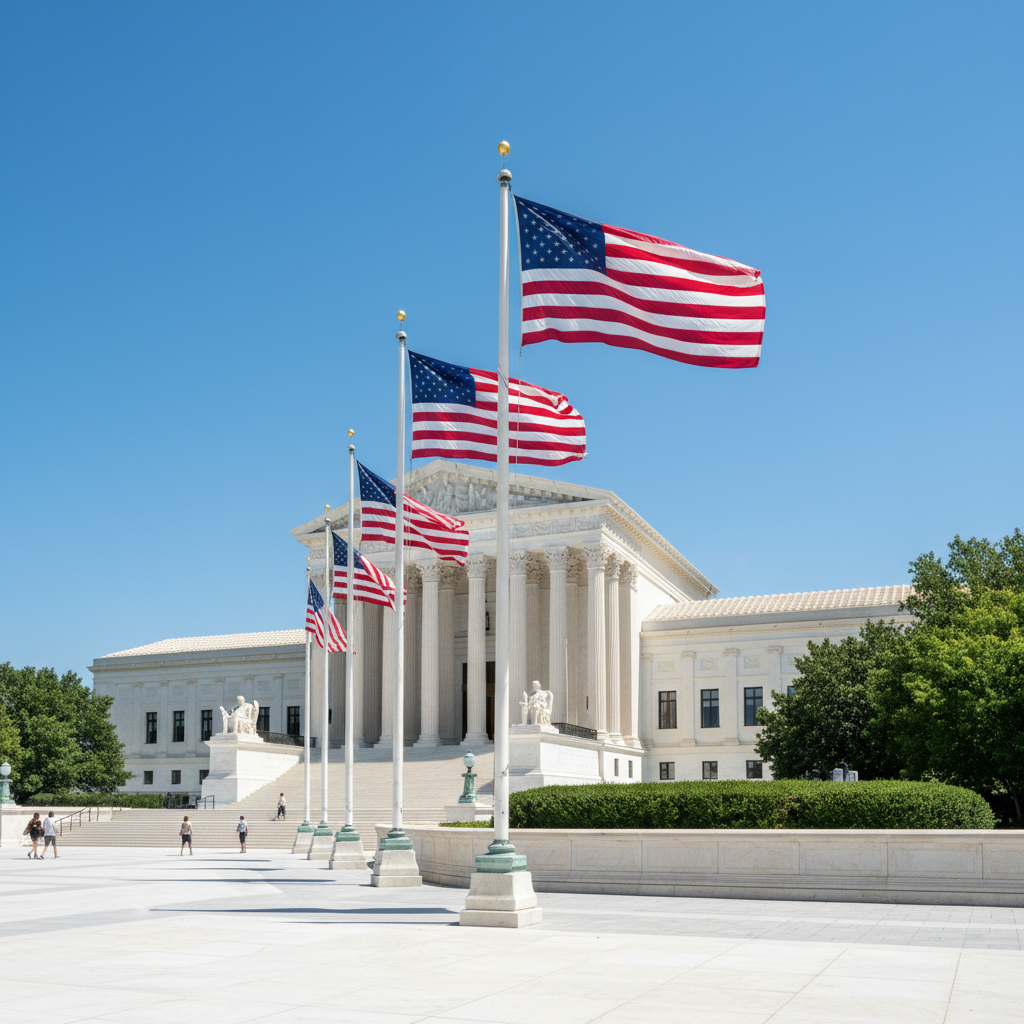
Lawyers for the Trump administration asked the Supreme Court late Tuesday to let it freeze billions in foreign aid spending that Congress had already approved. The request to the justices returns the foreign aid fight to the high court for the second time in six months.
In the emergency appeal, the U.S. Solicitor General’s office asked the justices to stay lower court rulings that require the administration to start moving money for the U.S. Agency for International Development (USAID) once again. USAID has about $12 billion in aid money that must be obligated by September 30.
President Donald Trump, who returned to office earlier this month from a 17-day holiday in January, signed an executive order on his first day back directing the federal government to freeze most foreign aid payments. He described the move as an effort to root out “waste, fraud, and abuse” in foreign spending.
U.S. District Judge Amir Ali in Washington, D.C., blocked the freeze in February, ruling the White House must continue to disburse money for projects Congress had already approved. Judge Ali gave the Trump administration a schedule of payments on billions in USAID grants that the administration has been trying to stop ever since.
The U.S. Court of Appeals for the D.C. Circuit heard arguments on the Trump administration’s appeal on August 7. At the end of the month, the appellate court returned to the case and, in a 2-1 decision, vacated Judge Ali’s injunction against the freeze on USAID grants.
Judge Karen L. Henderson, a George H.W. Bush appointee, wrote in the majority opinion that the plaintiffs — aid organizations seeking to restart their grant payments — do not have “cause of action” under the Impoundment Control Act, also known as the ICA, or under the Administrative Procedure Act. (RELATED: ANALYSIS: Federal Judge Hands Trump Legal Win in Fight with Foreign Aid Groups)
The Trump administration has long argued that the foreign aid organizations lack legal standing to sue over the funding dispute, and Henderson wrote in her opinion that she agrees. The appeals court’s ruling to dismiss the case is the current law of the land, but the court has not yet formally issued a mandate on the decision, effectively leaving Judge Ali’s order in place.
As a result, the Trump administration is in a race to act before Congress’s fiscal year ends on September 30, and the government is on the hook for the entire $12 billion.
Argument to the Supreme Court
In his emergency appeal to the Supreme Court on Tuesday, U.S. Solicitor General D. John Sauer wrote the government “must rapidly obligate approximately $12 billion in foreign-aid funds by September 30.”
“If this Court does not intervene, the September 30 deadline is likely to doom the administration’s claim because of the irreparable harm that would flow from the government’s inability to take action,” Sauer wrote in the filing.
The solicitor general’s office also argues that U.S. District Judge Ali, whose order the administration is appealing, “effectively prejudged the case against the defendants.”
“The district court did not merely resolve competing legal claims but instead abridged the executive branch’s constitutional powers through the deployment of private causes of action not authorized by Congress,” Sauer wrote.
The plaintiffs in the case are a group of foreign aid groups that have projects and programs funded by USAID. The Trump administration argues that the plaintiffs cannot bring the case in the first place.
U.S. District Judge Amir Ali in Washington, D.C., blocked the freeze in February, ruling the White House must continue to disburse money for projects Congress had already approved. Judge Ali gave the Trump administration a schedule of payments on billions in USAID grants that the administration has been trying to stop ever since.