
- calendar_today August 6, 2025
Could the Show Reshape the Future of the Franchise?
Netflix is putting the Assassin’s Creed video game franchise into development for the first time since 2020, so fans of the massively popular title may finally get some news on the live-action version they’ve wanted since the series’ release. While it remains to be seen what the live-action series will look like or even if it will be a faithful adaptation of the universe Ubisoft created for their popular video games, some insight has been provided by the series’ showrunners as to what fans can expect.
After years of waiting, Netflix has officially announced that they are moving forward with a live-action series of Assassin’s Creed, the long-running, award-winning video game franchise with a diverse following from players all around the world. It was first reported by Variety that Netflix had greenlit the series in 2020; however, with no further updates or information, it became something of a video game-development “Mehmet” until now. But at long last, the series will get a shot.
Two Showrunners Will Lead the Charge for Netflix’s Assassin’s Creed
Netflix recently made a move to solidify the showrunner ranks by announcing Roberto Patino and David Wiener as the creative duo to lead Netflix’s long-anticipated Assassin’s Creed adaptation. Patino has been known for his previous work with gritty and stylized shows, most notably Sons of Anarchy and Westworld, and along with David Wiener, could be a winning combination for Assassin’s Creed. David Wiener has had experience with video game-related adaptations in the past, leading the live-action Halo for Paramount+ and also working on AMC’s Fear the Walking Dead. These two have already begun work on the first season and have some details on what to expect from the series.
In a statement, the showrunners said, “We’re both lifelong fans of Assassin’s Creed. We first played the original game in 2007 and have been keeping up with the series since then. Every day on this show, we’re reminded of just how big and ambitious this world is, and how deep and layered the stories can go. But under all of the swashbuckling action and historical intrigue is a very human story about identity and purpose and faith, and about our connection to one another across time.”
The series will also aim to make sure that it is meaningful at its core. “Above all else, this is a show about the value of human connection—across time, across cultures—and the perils of severing those connections. We’re grateful to have a team at Ubisoft who is as passionate about these themes as we are, and the full support of Netflix as we embark on this journey. We can’t wait to share it with the world.”
Ubisoft’s Assassin’s Creed Is a Video Game Series Rich in History
Ubisoft’s Assassin’s Creed franchise is a long-running series, launched in 2007. A first in terms of “social stealth” gameplay, Assassin’s Creed transported the player to the Holy Land during the time of the Crusades. The stealth movement elements that the franchise would become known for were in full effect, allowing for this game and its successors to take advantage of players using their environment to “hide in plain sight” from guards. These would become core elements of the Assassin’s Creed franchise in the following titles, but the earliest games in the series have also aged the least well.
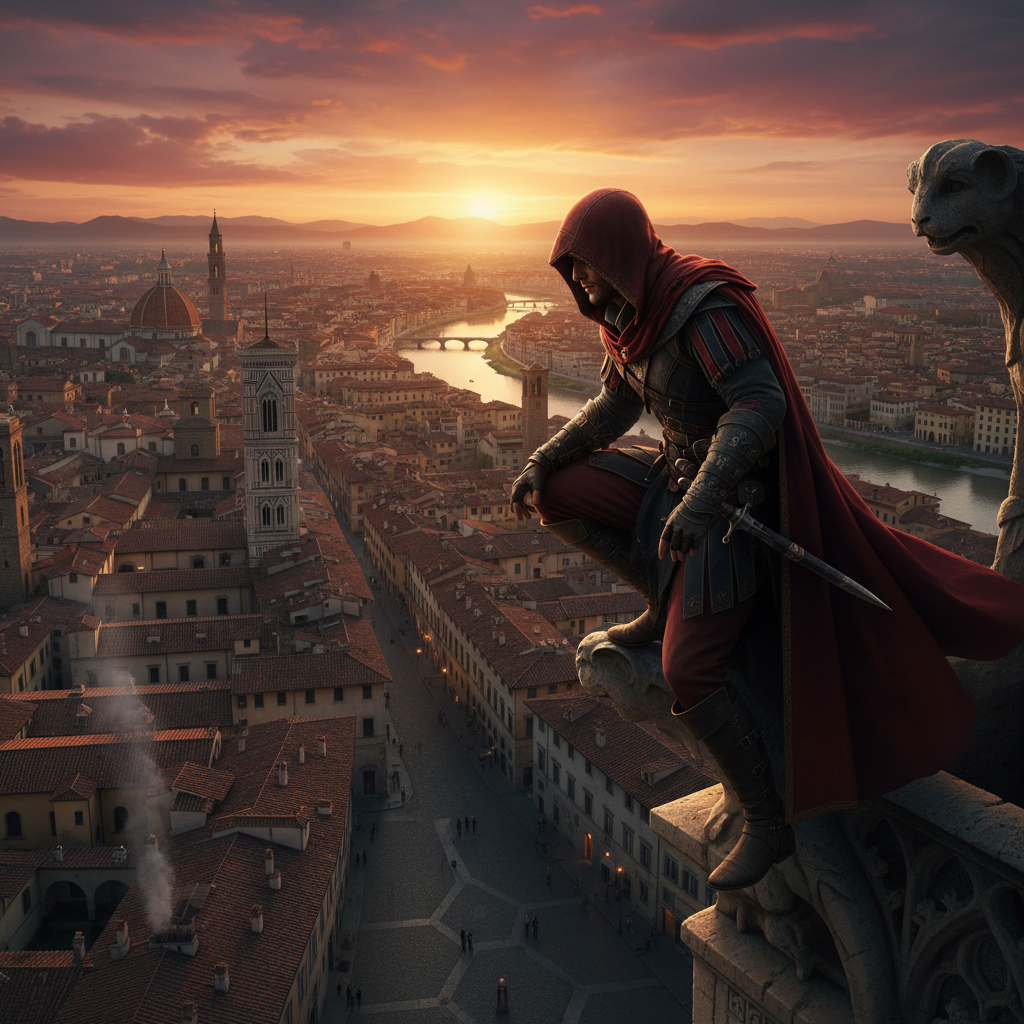
The real breakout game for Assassin’s Creed was the release of Assassin’s Creed II. Jumping several hundred years forward to the Italian Renaissance, the series hit its stride with what would become the franchise’s all-time favorite protagonist: Ezio Auditore da Firenze. His skills as a character, both a world-class assassin and a compelling character to play, made the game an instant hit, with players coming back over the following few years with two direct sequels. Brotherhood, Assassin’s Creed III, and IV: Freedom Cry. The future seemed bright for Assassin’s Creed, but the development team would have to get to the end of the road for Ezio before the true heights of Assassin’s Creed could be seen.
In the 18 years since the first release, 14 Assassin’s Creed titles have been launched, with more being teased in the future. The high points of the series have varied from game to game in terms of period and even location, but as the series progressed, more and more open-world RPG elements have been introduced to the core of the gameplay. Most recently, Ubisoft has expanded its set of locales even further, with modern-day installments taking place in San Francisco and Mexico, while more historical titles can be found in Ancient Greece and Viking Age Britain. The most recent installment to be launched for Assassin’s Creed is Shadows, a leap into feudal Japan that had been wanted by fans of the series for many years. Though Ubisoft had to make some hard decisions about their games over the course of the past year, in terms of Assassin’s Creed: Shadows, they have found some success by delaying the game in order to give it more time to be polished to a higher level. The reception thus far has been very positive for the game as a result.
Information is still very light for the Netflix live-action series, however. The main plot, while shrouded in mystery, is expected to follow the basic tenets of the mainline games from the franchise. Modern-day adventurers access the memories of their ancestors through genetic memory, reliving their lives while also being stuck in a millennia-old war between the Assassins and the Templars. This hasn’t stopped some from hypothesizing and creating “headcanons” about what might come. For example, a likely direction for the show to take might be inspired by some of the preludes and spin-offs the franchise has created in the past.
A Film Has Already Touched on This Subject
It’s important to note that a live-action film adaptation of Assassin’s Creed has already been produced, starring Michael Fassbender. Released in 2016, Assassin’s Creed was able to secure a profitable box-office return, but didn’t leave much of an impression on fans of the franchise or critics of the time. There has been no indication thus far as to whether the Netflix series will in any way connect to or be affected by the events of the film version.
The Netflix live-action adaptation of Assassin’s Creed is sure to be welcomed with open arms into an entertainment ecosystem in 2022. The Last of Us, HBO’s foray into video game adaptations for television, has proven that these stories can both hit very hard on an emotional level and be seen as high-quality content by players. With Netflix already taking bold steps into genre storytelling, especially in the areas of fantasy and sci-fi, Assassin’s Creed is sure to find a good home if it is respected and treated with care.
The potential difficulties in creating the right series, however, are still very real. The Ubisoft series spans millennia, dozens of civilizations and continents, and even multiple protagonists, all told in parallel with a more modern-day narrative. The challenges of balancing out these different elements and threads are massive. Fans will be hoping that this new team will stay true to the deeper philosophy of the series while still allowing for this property to be accessible to those who have never had the time to play the games.
Until further information is made available on the Netflix series, which could come as soon as casting is revealed or as far in the future as the first season’s release, the franchise is sure to see a spike in interest from fans old and new. Netflix is doubling down on its efforts to greenlight games and IP with live-action potential, and Assassin’s Creed may finally be the right combination of history and action to succeed in this endeavor.


