
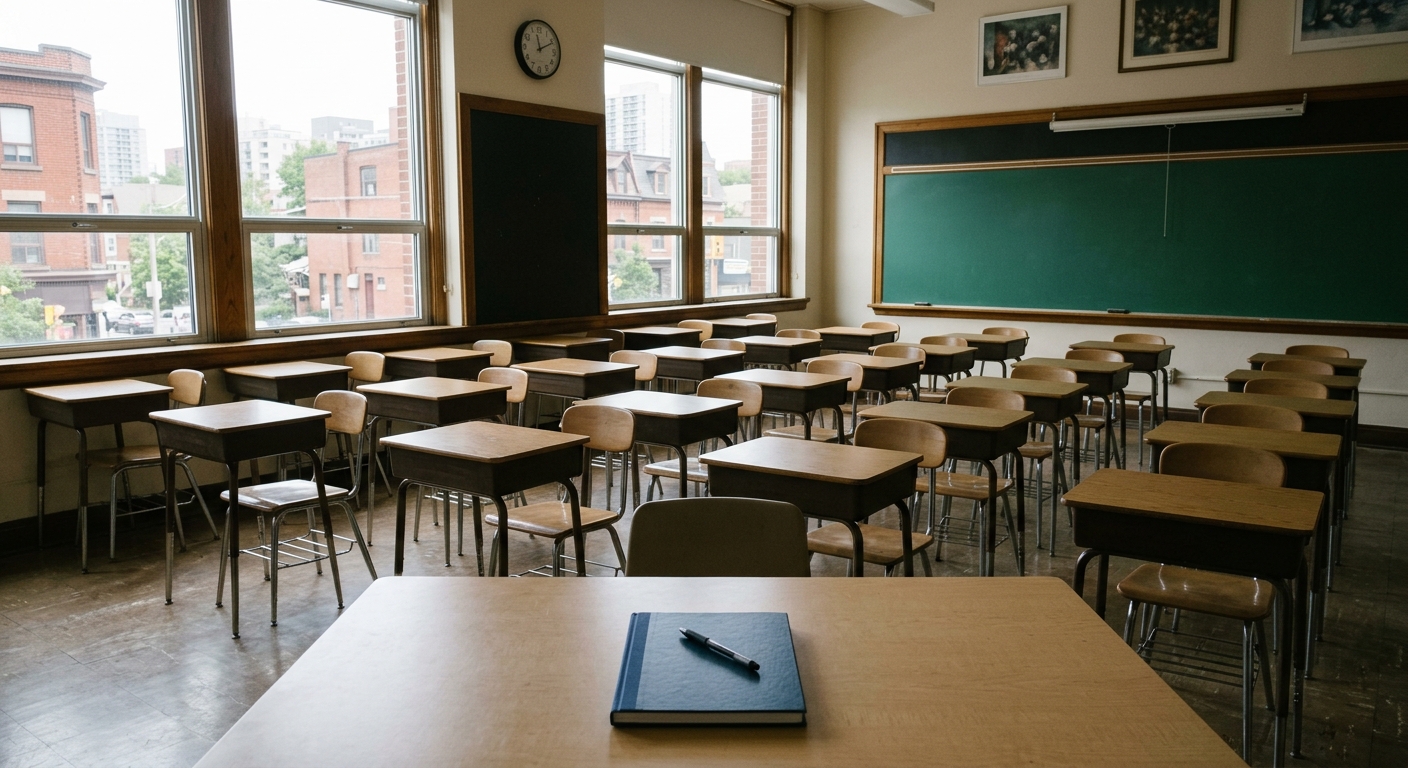
AI-generated illustration; not a photograph of the reported event.
- calendar_today October 21, 2026
Ontario Government Extends OSAP Pause for Private Career Colleges
The Ontario government has confirmed an extended pause on Ontario Student Assistance Program (OSAP) payments for students attending private career colleges. This measure, introduced in early October 2026, is expected to last until new approval processes for private post-secondary institutions are implemented, leaving many students voicing concerns about their academic future and financial stability.
Background: OSAP Payments Halted Following Audit Findings
The pause was enacted by Colleges and Universities Minister Nolan Quinn after preliminary results from an audit revealed significant mismanagement concerns regarding OSAP usage at private career colleges. Speaking on the situation, Minister Quinn stated that the hold on payments would continue until the government establishes a revised system for approving private institutions' participation in OSAP. This new process is not anticipated to be ready until the new year. Additionally, the government is working to secure alternative student loan options with third-party banks.
Widespread Impact on Students and Institutions
The halt is affecting a broad range of college students across Ontario. While the government says the move aims to protect the integrity of OSAP and taxpayers, many students believe they are being unfairly penalized for alleged mismanagement by others. The advocacy group Career Colleges Ontario has criticized the decision, emphasizing that compliant institutions and their students are facing significant uncertainty. "While we support stronger oversight measures and proposed legislation to protect OSAP's integrity, many students are struggling to pay rent, support their families, and continue their studies," the organization stated.
Education Disruption and Financial Hardship for Students
Several students have expressed deep concern over the extended pause in funding, fearing it could prevent timely graduation and burden them with financial hardships. Jennifer Koster, enrolled in the law clerk program at Trillium College, described the initial announcement as "a bomb being dropped." Koster relies on the Ontario Disability Support Program, and with the college seeking tuition payment plans of about $1,500 per month, she fears she may not be able to continue her education.
Similarly, Scott Daley, a massage therapy student at CTS Canadian Career College in Barrie, has felt the impact of the pause acutely. He shared that the uncertainty has affected his ability to cover basic living expenses such as groceries and has caused significant stress and health concerns. Deanna Hutten from McMaster Divinity College revealed that she has reduced her course load and increased her work hours to manage financially, noting that the situation was not due to her own actions but government decisions.
Colleges Suspend Classes Amid Funding Uncertainty
The situation is further complicated by some colleges responding to the funding freeze by suspending classes. Trillium College, for example, halted all classes at its campuses due to the uncertainty around OSAP payments, leaving students in limbo and with no clear timeline for resuming their studies. For students like Marina Whitehead, who is studying to become a community developmental service worker and expected to graduate in February, the disruption brings further anxiety and frustration.
Government and Student Responses to Ongoing Challenges
Minister Quinn acknowledged in his statement that the pause is affecting students and families across Ontario, reiterating that the measure is necessary to maintain OSAP integrity. "We understand the impact that this work is having on students and families across the province," he said, promising to restore certainty and stability as soon as possible.
Meanwhile, students remain frustrated by both the government's sweeping action and their colleges' responses. Whitehead conveyed her dissatisfaction, noting that government officials do not have to worry about their next meal or eviction notices the way affected students now do. Advocacy groups and students continue to call for a more targeted approach to address audit findings, one that does not leave compliant students and schools facing extended uncertainty and hardship.
Source: cbc.ca.


