- calendar_today August 7, 2025
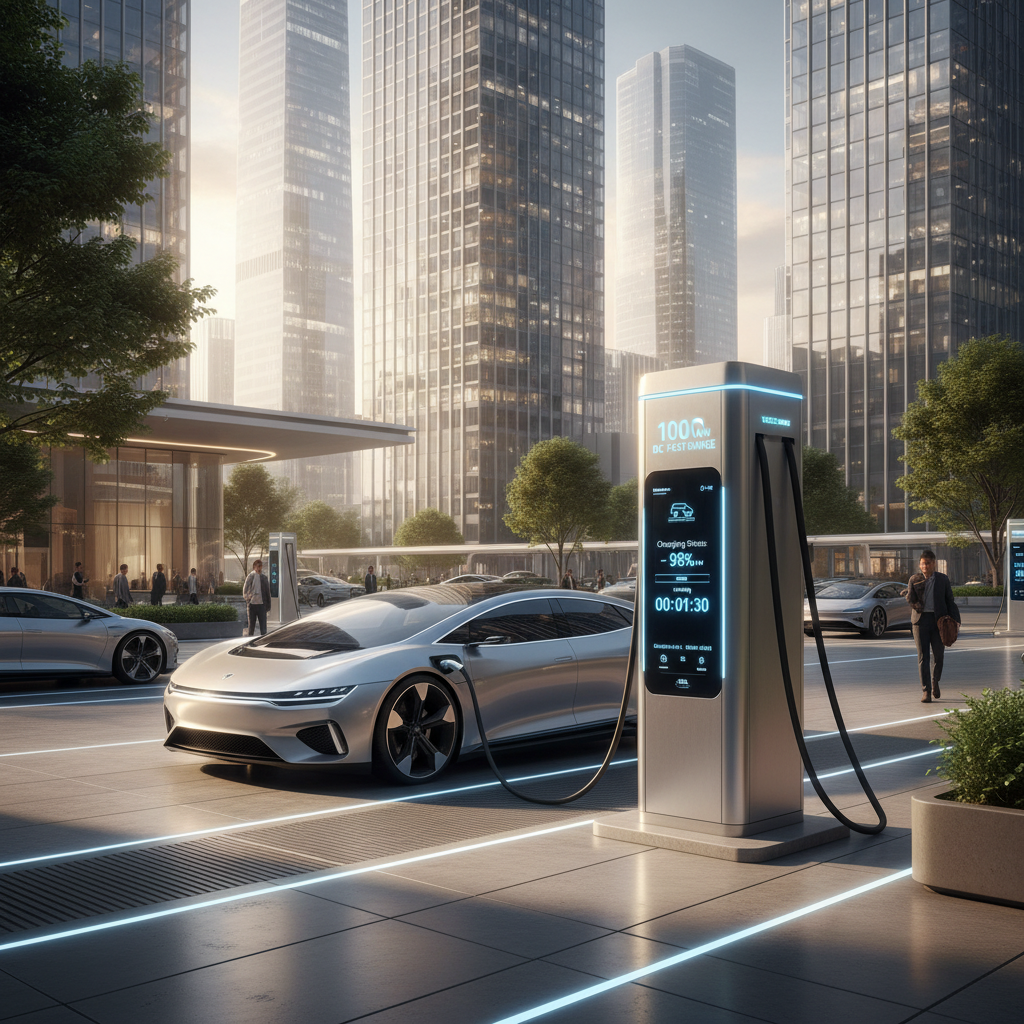
The electric vehicle (EV) industry experienced a major technological revolution when BYD, the Chinese automotive leader that has overtaken Tesla in worldwide EV sales, introduced its groundbreaking “super e-platform.” The new advanced system with 10C charging capability and 1,000 kW DC fast chargers targets significant EV charging time reductions to match the speed of gasoline refueling. The company developed a core innovation which enables vehicles to gain 249 miles (400 km) of driving range in just five minutes which far exceeds existing industry benchmarks. Tesla Superchargers deliver a maximum power of 250 kW while Electrify America chargers produce 350 kW but Formula E high-performance chargers still only manage to achieve 600 kW.
BYD’s 249-Mile Dash in Five Minutes Disrupts EV Industry
BYD chairperson Wang Chuanfu declared that the company aims to achieve electric vehicle charging speeds equivalent to refueling gasoline cars. The super e-platform battery technology enables charging at 10C which allows the battery to reach full capacity in just 6 minutes when conditions are ideal. This technology enables fast energy transfer through the use of 1,000 kW DC chargers which leads to drastic reductions in charging durations. Over 4,000 megawatt chargers will be installed throughout China by BYD to support the Han L sedan and Tang L SUV electric vehicle models which were unveiled recently.
The international market forces create an intricate scenario. BYD continues to expand into European markets yet encounters substantial political barriers to entering the US market. Bipartisan congressional members have raised national security and economic competition concerns that have triggered initiatives to limit Chinese EV producers from operating in the US market. Recognizing the difference between range estimation standards must be a priority. BYD reports a 249-mile range based on the CLTC standard which provides more generous results than the US EPA standard. The range performance under EPA testing standards is expected to result in lower values.
U.S. automakers can still pursue licensing rights for BYD’s groundbreaking technology as a viable solution even though there are current obstacles. Licensing agreements with American car manufacturers would expedite the implementation of faster charging standards to bypass political roadblocks and increase rapid charging access for more consumers. This technology achieves real-world efficiency through multiple variables such as battery temperature conditions, state of charge levels, and charging infrastructure quality. The conversion of electric energy into driving range depends heavily on a vehicle’s efficiency which is measured in kilometers per kilowatt-hour (km/kWh).
The introduction of BYD’s “super e-platform” represents a groundbreaking development in EV charging infrastructure which aims to resolve the critical issue of extended charging durations that hinder electric vehicle adoption. Through its efforts to construct a comprehensive charging network throughout China the company fortifies its standing as an EV market leader while simultaneously laying the groundwork to revolutionize electric transportation. Through technology refinement and infrastructure expansion BYD leads electric mobility into a future where EV charging speed will match gasoline refueling convenience.
The adoption of rapid-charging technology across the automotive industry could trigger heightened competition among manufacturers who will then focus on enhancing their EV platforms through innovative improvements. The ongoing technological competition promises advancements in battery efficiency while improving vehicle range and expanding fast-charging networks across the globe. The implementation of faster EV charging technologies such as BYD’s by countries aiming to lower carbon emissions benefits consumers while helping establish a sustainable transportation network. Through licensing agreements a worldwide transition to electric vehicles becomes feasible which boosts both the appeal and practicality of sustainable travel.