- calendar_today August 12, 2025
TORONTO —
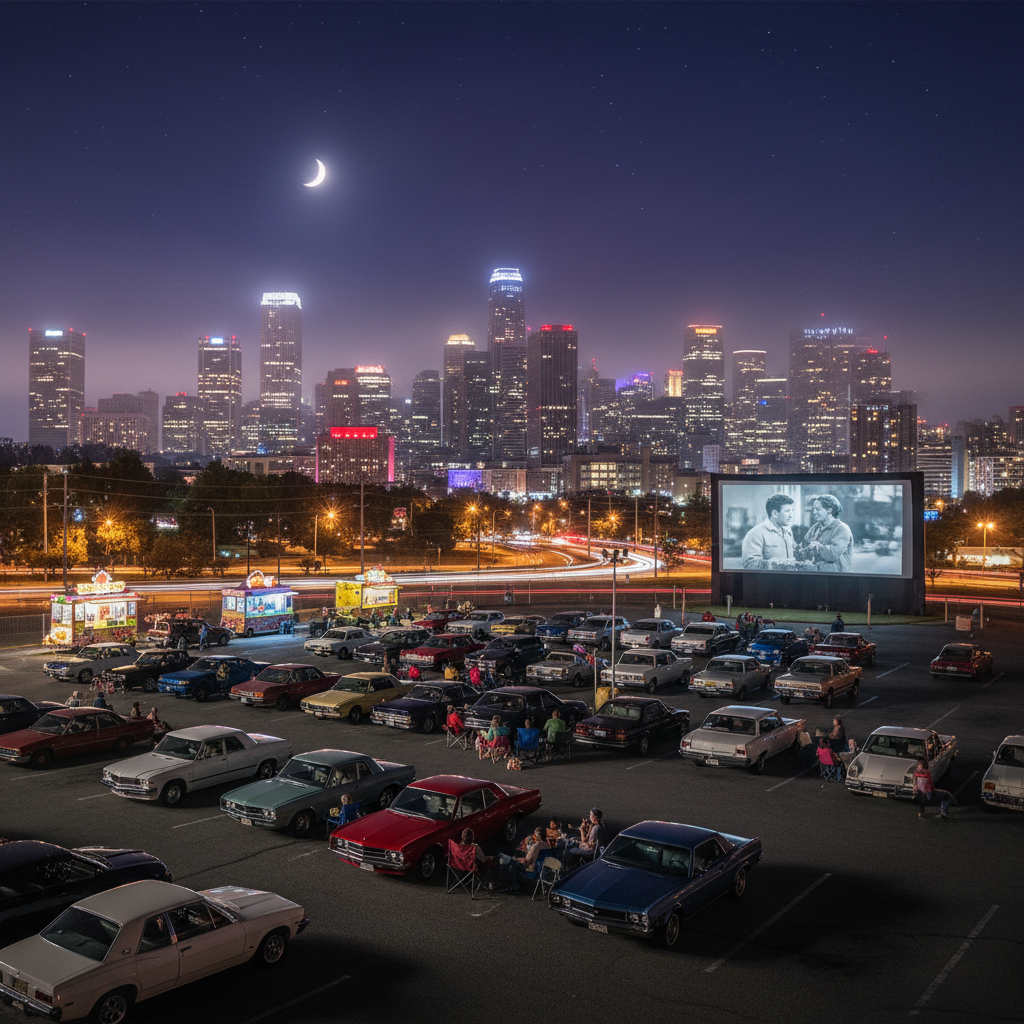
In a city where screens are everywhere — in hands, on buildings, inside every train car — the simplest one feels revolutionary. A single glowing rectangle, standing in a darkened lot on the edge of the skyline, pulling people together the old-fashioned way.
In 2025, Toronto has rediscovered the drive-in. Not as retro chic or marketing gimmick, but as an antidote. Against the hum of constant motion, these pop-up and permanent outdoor theaters have become rare sanctuaries where people trade rush for rhythm and rediscover what it feels like to just sit still.
An Urban Escape Without Leaving the City
The first revival started quietly in Etobicoke, when a retired projectionist opened Skyline Junction on the site of an abandoned mall parking lot. “I missed the sound of radios all tuned to the same thing,” he says, laughing. “It’s like the city breathing in sync for once.”
By midsummer, similar spaces had sprung up across the GTA — in Scarborough, Vaughan, and Mississauga. Some were elaborate, with food trucks and LED screens; others were nothing more than a painted wall and a local projector. Yet all shared the same spirit: unpolished, communal, deeply human.
The crowds came in all shapes — young couples with kombucha and car snacks, families with minivans full of pillows, Uber drivers on their night off, students still wearing their lanyards from summer jobs. Everyone looking for the same thing: a place where the noise stops.
Where City Light Meets Movie Light
Toronto’s skyline has a rhythm of its own — glass, traffic, and motion. But under the drive-in’s soft glow, it feels gentler. The CN Tower blinks red in the distance, streetcars hum somewhere unseen, and the night air smells faintly of asphalt and popcorn.
You can hear laughter drift from nearby cars, the fizz of soda cans, the sound of someone singing along softly to the pre-show playlist. Even the constant drone of the city seems to fold itself into the experience, turning into a kind of soundtrack.
“It’s strange,” says attendee Chris Dominguez, parked downtown for a Friday screening. “You feel like you’ve left the city, but you can still see it breathing behind the screen.”
Modern Rhythm, Classic Heart
Toronto’s drive-in revival blends the old soul of the 1950s with the texture of the 2020s:
- FM broadcast through digital car stereos with pristine clarity
- Local food trucks serving jerk chicken, samosas, bao buns, and beaver tails side by side
- LED billboards doubling as movie screens during late-night showings
- Short films from Toronto creators spotlighting stories of migration, music, and home
Before each film, organizers play a brief montage of Toronto — fragments of streetcars, Kensington markets, lakeshore sunsets — edited together by local artists. It’s not part of the feature, but it always gets applause.
“There’s a kind of poetry in watching your city become part of the movie,” says filmmaker Nora Alvi, whose short documentary On Bathurst After Rain screened at one of the first revivals. “You remember that you’re living inside a story too.”
A City That Learns to Pause
At the heart of it, Toronto’s new drive-ins are about recovery — from pace, from screens, from isolation. They remind people that community doesn’t require conversation, only presence.
During a late-August showing near the waterfront, the night air turns warm and heavy. The movie ends, but no one leaves. The sound of waves mixes with laughter. Someone turns up an old song — Blue Rodeo, maybe — and for a few minutes, it feels like the city is exhaling.
Cars sit quietly under the skyline’s reflection. Neon lights flicker off windows. In the rearview mirrors, the screen’s light softens and fades. But the calm remains, as if Toronto itself has remembered how to rest.
When the Lights Come Back On
The crowd disperses slowly. Tires roll over damp asphalt. The CN Tower glows steady, a heartbeat in red. You can almost feel the gratitude in the air — not for the movie, but for the pause it created.
Because in this city of ambition and noise, the drive-in has become something sacred again: a way to stop time without leaving town.
So if you find yourself driving home late, skyline glittering ahead, and notice a screen flickering between buildings — don’t pass it.
Pull in.
Turn off the engine.
Let Toronto go quiet around you.
You might just find that the most beautiful view in the city isn’t the skyline.
It’s the stillness beneath it.