- calendar_today August 28, 2025
Why KPop Demon Hunters Could Change the Future of K-Pop Films
Since its June release, KPop Demon Hunters has been a chart-topping sensation on Netflix, debuting in the global top 10 in 93 countries and currently ranking number two in the global list. The film, a fantasy adventure with high-energy Korean pop music at its core, has been streamed over 33 million times in two weeks, and fans have already begun creating fan art. Demands for a sequel continue to multiply on social media.
The streaming success has translated to music streaming lists as well, with the 20 June release, the two fictional bands central to the film’s narrative, the all-female group Huntr/x and their debauched rivals Saja Boys, have performed exceedingly well on global music charts. Their seven inclusions on the Billboard Hot 100 have surpassed the 24 combined tracks by BTS and Blackpink in the list. The two acts, fictional or otherwise, have both held the first and second spots on Spotify’s US chart, a first for non-real artists.
KPop Demon Hunters charts the journeys of the three members of Huntr/x, Rumi, Mira, and Zoey, as they balance the pressures and expectations of being global music icons with their off-stage secret life of protecting the world from the undead. Their rivalry with the Saja Boys is interspersed with elaborate stage routines, slick fight sequences, and a relatable coming-of-age storyline about friendship, trust, and self-acceptance. The unique blend of high-energy music, comedy, heart, and fantastical elements has found cross-cultural appeal that’s apparent in the soundtrack’s quality.
The music, particularly, is at the heart of KPop Demon Hunters as a pop culture phenomenon. “I have always loved Korean idols as a kid, and when I watched them, there was a kind of energy they had in their music that made me want to be a part of it and be a part of the next big thing, said co-director Maggie Kang, a Korean-Canadian. In KPop Demon Hunters, the three Huntr/x members use music as an actual weapon against evil, and it’s worked seamlessly into the larger fantasy narrative, never feeling out of place or like a song that’s been jammed in.
Amanda Golka, a 28-year-old creator from Los Angeles, who does not watch or follow K-pop, found herself bewitched by the sound. “I have been blasting the soundtrack from Spotify every time I’m in the car,” Golka told me. “I can’t wait for people to get their hands on it. I honestly can’t wait to drive my friends around and play it for them. It’s interesting how such a universal language the music is.
Pay Homage to K-Pop Tradition
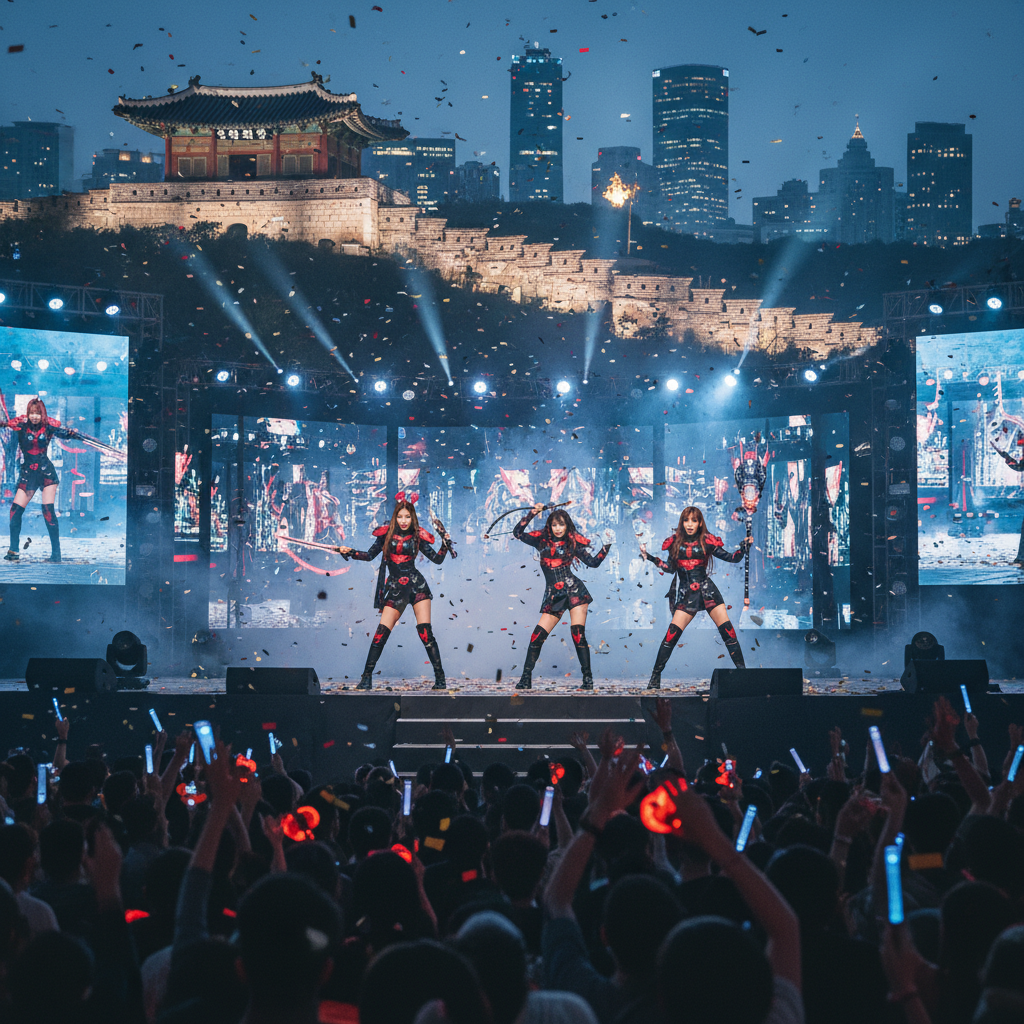
Attention to detail, particularly when it came to cultural accuracy, has been another big factor in the film’s crossover success. K-pop music, K-dramas, and Korean movies are already mainstream in the US and other Western markets, but KPop Demon Hunters seemed to go one step further. From the social custom of using metal chopsticks at the dinner table, to a shot of the characters playing in front of some of Seoul’s most iconic historical sites, including the ancient city walls and Hanuiwon clinics, public bathhouses, and Namsan Tower, to Korean signage and even one or two Korean words inserted into a scene here and there, the production felt like it was intended for Korean viewers, specifically.
The cultural immersion extended to Korean K-pop fandom as well. The whole film is a love letter to the fan signing events, coloured light sticks, Kalgunmu (perfectly synchronised dance), Korean flags, and placards. It shows rather than tells, and the experience of being a K-pop fan, or even just enjoying the music, is covered broadly rather than focusing on one specific group or era, allowing casual viewers to appreciate it as well as hardcore fans.