
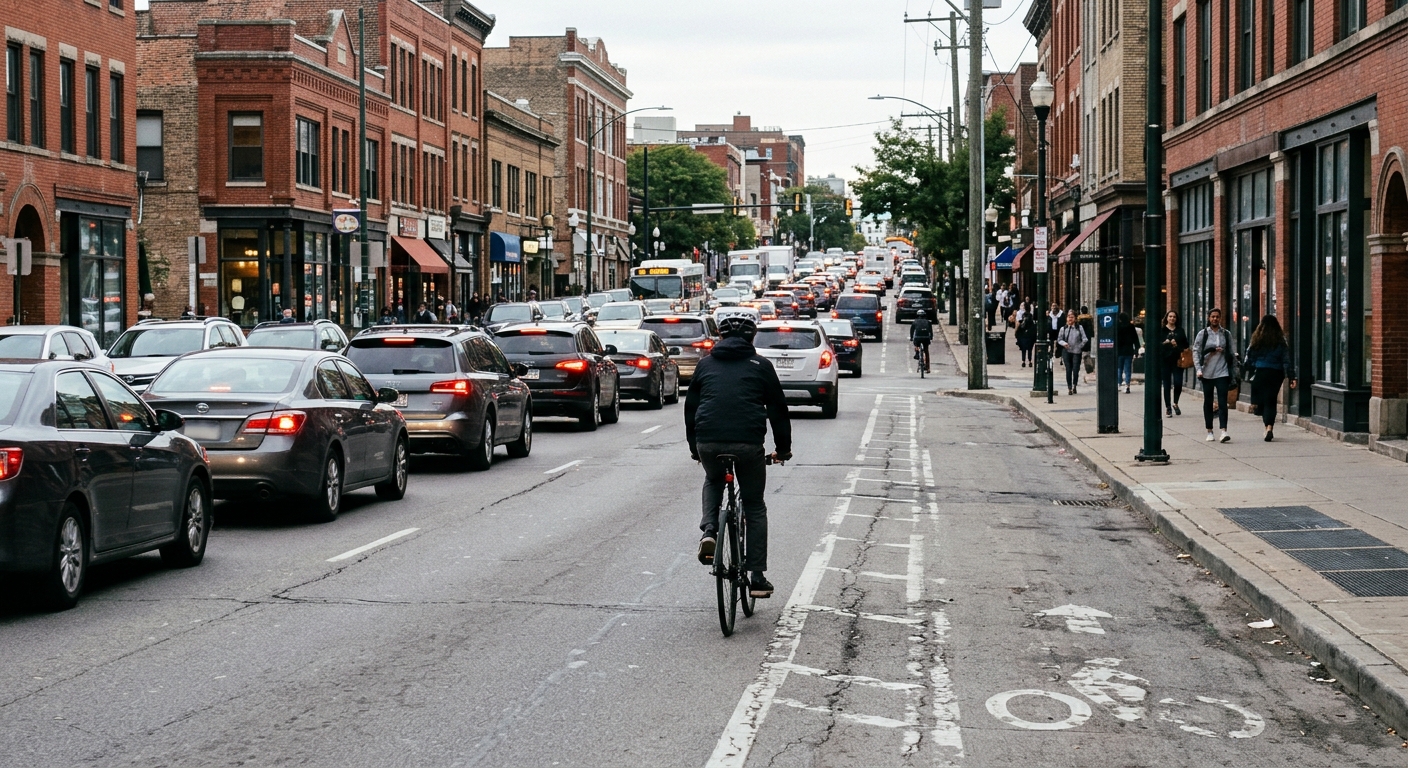
AI-generated illustration; not a photograph of the reported event.
- calendar_today October 30, 2026
Ontario Government Finalizes Bike Lane Removal on Bloor Street West
The Ontario government has fully removed bike lanes from a 1.2-kilometre segment of Bloor Street West in Etobicoke, according to a provincial release on Friday. This marks the first stage in Ontario’s plan to eliminate bike lanes from three major routes in Toronto, a move that has sparked public protests and legal disputes.
Protests and Arrests Highlight Public Opposition
The decision follows a demonstration by dozens of residents in Etobicoke protesting the bike lane removal. Toronto police reported that four individuals were arrested during these protests for mischief and obstructing police. The action on Bloor Street West is the initial step in a broader provincial strategy, which also targets Yonge Street and University Avenue for future lane removals.
Provincial Justification and Future Plans
The government stated that restoring vehicle lanes between Clissold Road and Royal York Road was aimed at reducing gridlock, supporting local businesses, and providing drivers with more time. Transportation Minister Prabmeet Sarkaria told CBC News, “Ultimately our goal was to move forward and get the city moving. We believe that the bicycle lanes were very underutilized.” Sarkaria confirmed that the province is accepting bids for contracts to remove an additional 18 kilometres of lanes across Yonge Street, University Avenue, and Bloor Street.
“This is just a portion of the removal that was put into place,” he added. The next phase will occur during the subsequent construction cycle.
Criticism from Cycling Advocates and Residents
Cyclists and advocacy organizations have voiced disappointment with the removal of the bike lanes. Michael Longfield, executive director of Cycle Toronto, criticized the province’s decision, stating, “It’s a kind of a shameful moment for their government…given they claim they’re not against bike lanes.” Longfield noted that the province could have accepted Mayor Olivia Chow’s proposal to preserve the bike lanes while restoring vehicle lanes, but instead chose to proceed with their removal.
Local resident Adam Rodgers, who regularly cycles with his daughter, expressed frustration: “It’s quite frustrating, honestly, as a father. I do wish that the Ford government could have taken the easy win…[and] given everyone a little bit of everything.” Rodgers reported that community sentiment favored compromise solutions, and that the costly removal was generally unpopular.
Debate Over Traffic Impact and Business Effects
Addressing claims that cycling infrastructure provided little benefit, Minister Sarkaria stated the province collected video data and consulted with local businesses, concluding that bike lane usage was “very minimal” and that businesses faced significant impacts. Sarkaria emphasized, “We’re not anti-bike lane. One of the measures that we want to put forward is, don’t clog major arteries...where we need cars to be moving. Let’s look at some secondary options where possible.”
Legal Battles Continue Over Bike Lane Removals
The controversy has also moved into the courts. Last year, a lower court found Ontario’s plan to remove 19 kilometres of bike lanes posed an unconstitutional risk to cyclist safety. However, in August, the Ontario Court of Appeal overturned that decision, stating the trial judge overreached into policy-making territory. Cycle Toronto and other advocates now intend to seek leave to appeal to the Supreme Court of Canada to challenge the province’s plan, arguing that it threatens cyclist safety and does not meaningfully reduce traffic congestion.
As Ontario’s removal of Toronto bike lanes progresses, the debate continues over traffic, safety, local business support, and the role of cycling infrastructure in the city.
Related coverage
Source: cbc.ca.


