
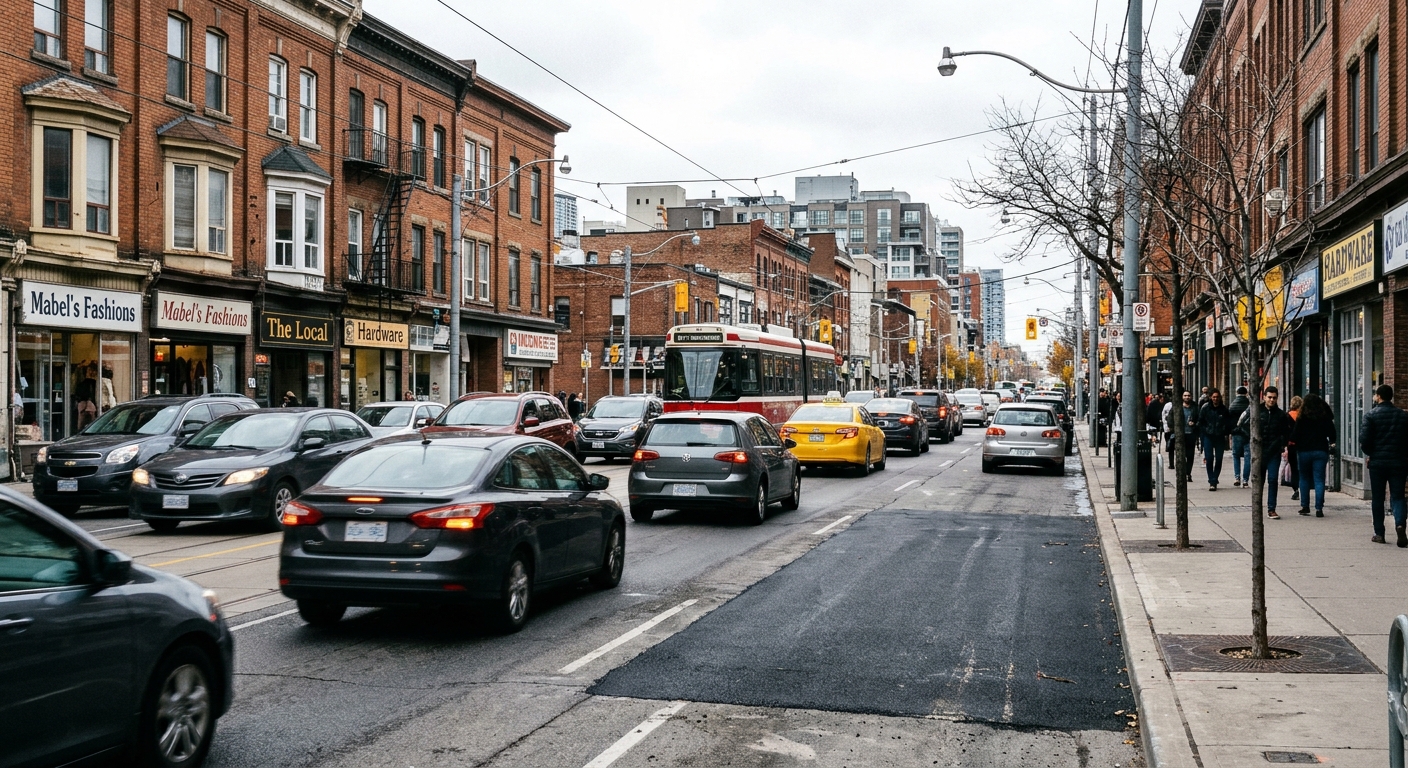
AI-generated illustration; not a photograph of the reported event.
- calendar_today October 31, 2026
Province Completes Bloor Street West Bike Lane Removal
Ontario has finalized the removal of protected bike lanes along a 1.2-kilometre stretch of Bloor Street West in Etobicoke, Toronto. The project, which aimed to restore vehicle lanes on the major thoroughfare, comes after weeks of public demonstrations, four arrests, and a high-profile court battle.
Background of the Controversial Project
The removal began following an announcement by Transportation Minister Prabmeet Sarkaria. The stretch between Clissold Road and Royal York Road saw the dismantling of cycling infrastructure, restoring vehicle lanes in both directions. Minister Sarkaria emphasized the province’s goal to address traffic congestion and make commutes faster for motorists, stating, “We need to get the city moving again. We need to ease congestion.”
Crew members removed precast curbs, delineators, signage, and bus pads. The road was then repaired and resurfaced, with new pavement markings and signs installed to accommodate restored vehicle lanes.
Court Battle Over Bike Lane Removal
The removal of the Bloor Street bike lanes followed a significant legal dispute. Earlier this month, the Ontario Court of Appeal overturned a Supreme Court decision that had prevented the province from dismantling bike lanes on portions of Bloor Street, Yonge Street, and University Avenue. The Supreme Court’s initial ruling had argued that removing bike lanes posed risks of serious injury or death for cyclists, violating their Charter rights.
After the Court of Appeal’s decision, the province moved forward with the project. The decision was widely criticized by cycling advocates and opposition politicians, who warned that the removal would put cyclists at risk.
Protests and Arrests Accompany Removal
The bike lane removal work was met with sustained resistance from cycling advocates and local residents. Multi-day protests took place, temporarily halting construction on the first day and drawing significant attention to the issue. With the support of police, work resumed, but demonstrators continued to oppose the project.
During the course of these protests, four individuals were arrested for allegedly ignoring police instructions and physically blocking the progression of the removal work.
Province Plans Further Cycling Infrastructure Removals
The Bloor Street West project is part of a broader provincial initiative. Ontario has announced plans to continue bike lane removal efforts on other parts of Bloor Street, as well as on Yonge Street and University Avenue. Minister Sarkaria stated, “The work isn’t done. We will be reinstating vehicle lanes on the remainder of Bloor Street, University Avenue, and Yonge Street.”
The minister noted that these measures are consistent with the provincial government’s mandate to address traffic gridlock, support local businesses, and prioritize road restoration, echoing ongoing debates about cycling infrastructure in Toronto.
Debate Over Cycling Infrastructure and Traffic Solutions
As the work concludes on Bloor Street West, controversy continues regarding the removal of protected cycling infrastructure in major urban corridors. Proponents of the bike lanes argue for their importance in ensuring cyclist safety and reducing congestion through increased cycling adoption, while provincial authorities maintain that restoring vehicle lanes will better serve economic and transportation needs in the city.
Related coverage
Source: nowtoronto.com.


