- calendar_today August 27, 2025
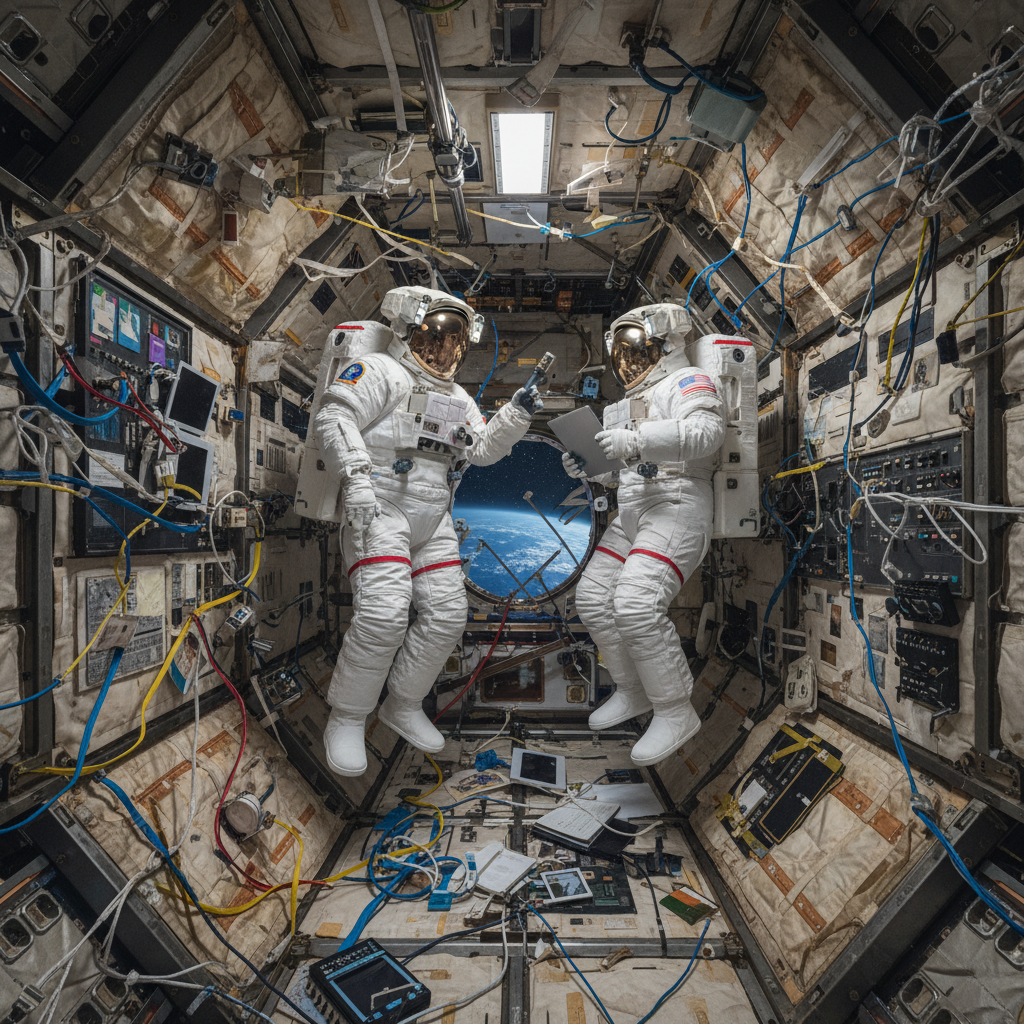
NASA has postponed the launch of Axiom Mission 4 because a new air leak on the ISS created a sense of urgency within the agency. NASA and Roscosmos have paused the launch of the four-astronaut commercial mission to the space station so they can continue their assessment of the current situation. The agency confirmed the launch delay exists but withheld specific details. Numerous reports indicate the leak poses a significant threat due to the fact that most ISS equipment is now close to three decades old.
The station has previously encountered problems with air leaks. The ISS began experiencing gradual pressure loss starting from the year 2019. The transfer tunnel of the Russian Zvezda service module has long been pinpointed as the main source of the leak since it represents one of the International Space Station’s oldest components. The PrK section connects the Zvezda module to the docking port used by Soyuz crew capsules and Progress supply ships. Russian cosmonauts carried out multiple repair attempts to fix the small cracks that developed in this area. These repair attempts succeeded in reducing the air loss rate to couple of pounds each day but failed to completely stop the leakage. The best solution discovered so far involves sealing the PrK module hatch and only opening it when docking is required.
A month ago Roscosmos declared successful completion of PrK module repairs which achieved complete sealing of the section while NASA confirmed halted leak rates in that specific module. At first glance this development appeared to represent significant progress. However, things quickly became confusing. Even though the PrK leak appears to have been repaired the ISS experienced ongoing air pressure loss. The station continued to experience pressure loss according to two sources who were unable to determine the specific cause of the problem.
Experts currently believe the problem lies with the hatch seals that connect to the PrK module. The PrK interior might be sealed but air from the rest of the station could still enter through the hatch seals. The PrK module maintains constant pressure levels while the entire ISS faces a reduction in its overall pressure stability. NASA has decided to proceed with caution because the problem continues to evade resolution. NASA leadership expresses concern about the situation according to a senior industry source who spoke with Ars Technica because of potential risks to the ISS’s structural integrity.
NASA postponed Axiom Mission 4 launch which was initially planned for Thursday. In a brief statement, the agency said: The delay of Axiom Mission 4 enables NASA and Roscosmos extra time to assess the situation and decide if more troubleshooting actions are required.
There’s another layer of concern: The continuous leaks indicate possible high cycle fatigue within the materials. A phenomenon which affects metals such as aluminum that are used abundantly on the ISS structure emerges when these metals endure repeated stress throughout their service life. If you bend a wire coat hanger back and forth repeatedly it will break. This same principle applies to spacecraft. Metal fatigue can cause unexpected structural failures as demonstrated by the 1988 Aloha Airlines accident where a piece of the fuselage separated during flight because of metal fatigue.
NASA evaluates structural cracking on the ISS as the highest risk in its 5-by-5 risk matrix because of its potential impact and likelihood of occurrence. While there currently exists no direct danger to the crew members the potential consequences of the situation remain deeply concerning.
NASA has neither shared additional information nor announced a press conference to discuss the issue further. In response to media inquiries, the agency has reiterated a single point: The International Space Station crew continues their routine duties without any safety issues.
Still, the silence leaves many questions unanswered. The International Space Station’s advancing age along with its deteriorating systems makes this new leak a clear demonstration of the difficulties faced in operating an aging space laboratory under severe conditions. The global audience awaits answers while engineers investigate the mystery in pursuit of a permanent fix.