- calendar_today August 16, 2025
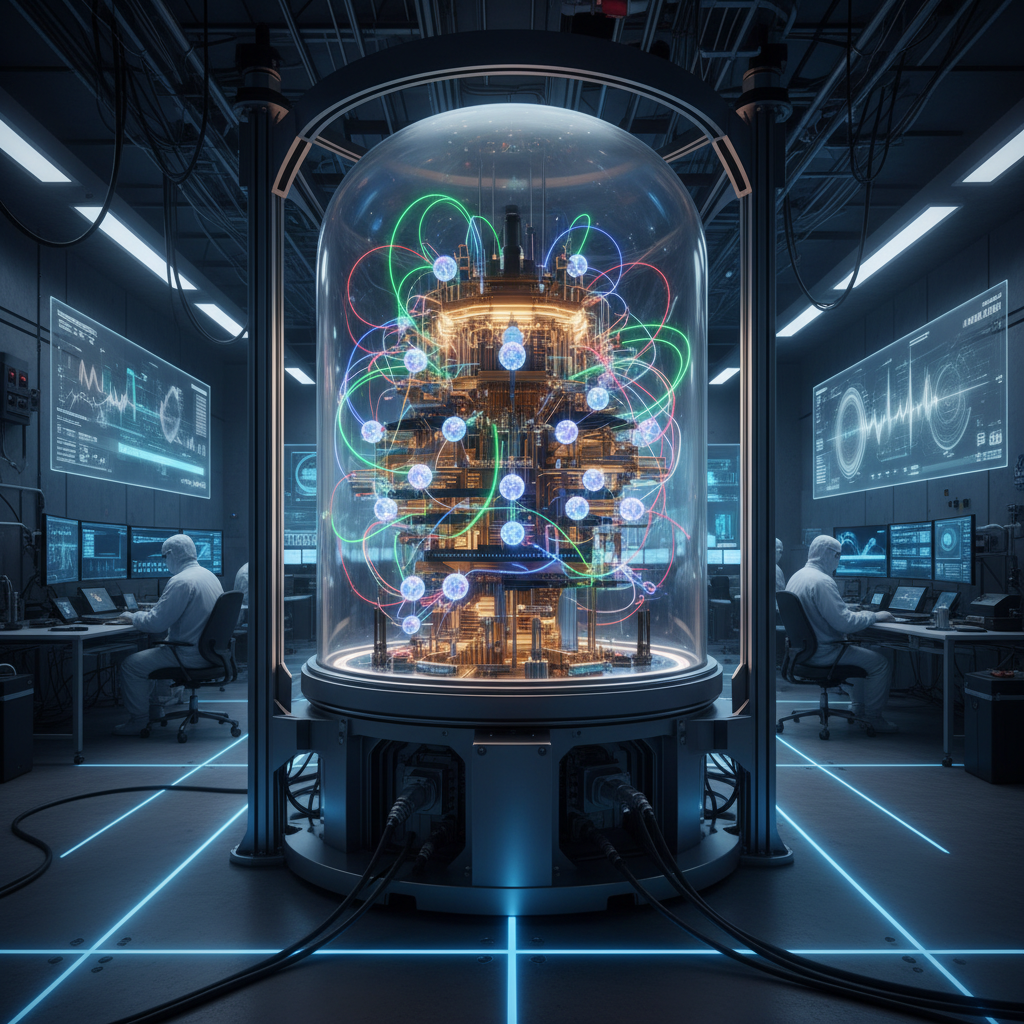
The fundamental building blocks of modern AI systems which are traditional computers use binary bits that represent data as either 0 or 1. Quantum computers, in contrast, utilize qubits. Qubits possess the unique property of existing in a superposition which allows them to simultaneously hold both 0 and 1 values.
Quantum computers achieve superior computational efficiency through the combination of qubit superposition states and the phenomenon of entanglement that interconnects qubits. The transformative potential for AI exists because quantum computers excel at executing the complex mathematical computations that machine learning algorithms depend on.
Navigating the Quantum Frontier
The implications of this research are far-reaching. The increasing intricacy and data demands of AI models have led to rising concerns about their energy consumption during training and operational periods. The potential for quantum computing to enable more efficient computation represents a pathway to create more sustainable AI systems.
Imagine training a large language model faster than current classical hardware allows while consuming dramatically less energy. AI’s environmental footprint could shrink while its accessibility expands through quantum computing which allows researchers with limited resources to join the AI revolution.
Artificial intelligence’s growing energy requirements drive an international effort to discover sustainable and efficient computation methods. Quantum computing stands as a potentially revolutionary method providing fundamental changes to traditional computation while incremental hardware and software advancements continue to hold importance.
Quantum computers utilize fundamental principles like superposition and entanglement to offer tremendous processing capabilities for AI tasks and could reduce energy demands of advanced AI models.
The current AI revolution depends on classical computers, which use bits that represent data as either 0 or 1. In contrast, quantum computers utilize qubits. Qubits have the unique property of existing in multiple states simultaneously, which enables them to represent both 0 and 1 at the same time. Quantum computers achieve higher computational efficiency through qubit entanglement, which connects and correlates their states alongside superposition capabilities.
Research focused on image classification recently achieved a major breakthrough in showcasing quantum computing’s capabilities for artificial intelligence. Scientists managed to move classical image data to quantum processors and carried out a simple classification task.
A draft paper shows how researchers are advancing quantum computing by bridging the data origin in classical computing with processing capabilities in the quantum domain. The study demonstrates that quantum computers go beyond theoretical concepts by showing their ability to run AI algorithms on functional hardware. The research team studied various techniques to transform classical image data that manifests as pixels into quantum states which quantum computers can understand and modify. Quantum circuits containing sequences of quantum operations were applied by the researchers to execute the classification process.
The Symbiotic Relationship: Quantum Computing and AI
Quantum computing in combination with AI technology offers extensive possibilities for mutual advancements. AI technologies offer enhancements to quantum hardware and software development through optimization of quantum circuit design and improvement of error correction techniques while automating the discovery of new quantum algorithms.
Quantum computing delivers essential computational power to solve complex AI challenges which enables the creation of stronger and more effective AI models. The interaction between these two advanced fields creates opportunities for accelerated advancements that produce breakthrough innovations beyond the reach of individual technological development.
Charting a Course Through Quantum Challenges
Quantum computing shows potential benefits for AI development but faces major obstacles to fully achieve its capabilities. Building scalable fault-tolerant quantum computers remains an extremely challenging engineering problem. Researchers need to solve problems related to qubit decoherence, gate errors, and scalability.
Researchers actively study the creation of quantum algorithms that can maximize quantum hardware capabilities for particular AI applications. Quantum programming languages and software tools need to be developed to enable wider access to quantum computing among researchers and developers.