- calendar_today August 18, 2025
Wait and See? The Uncertain Future of Nvidia's G-Assist.
The graphics technology giant Nvidia has begun intensive research into the potential of artificial intelligence to transform gaming experiences. Nvidia's GPUs excel at producing stunning graphics, but they have also launched their experimental G-Assist AI recently. A locally-run tool aims to boost PC performance and improve gameplay through innovative methods while showcasing emerging possibilities for human-computer interaction.
An Nvidia desktop application overlay facilitates interaction with an AI assistant through text or voice commands, which broadens user control beyond system monitoring while transforming gamer interaction with hardware and software.
G-Assist's Core Functionalities
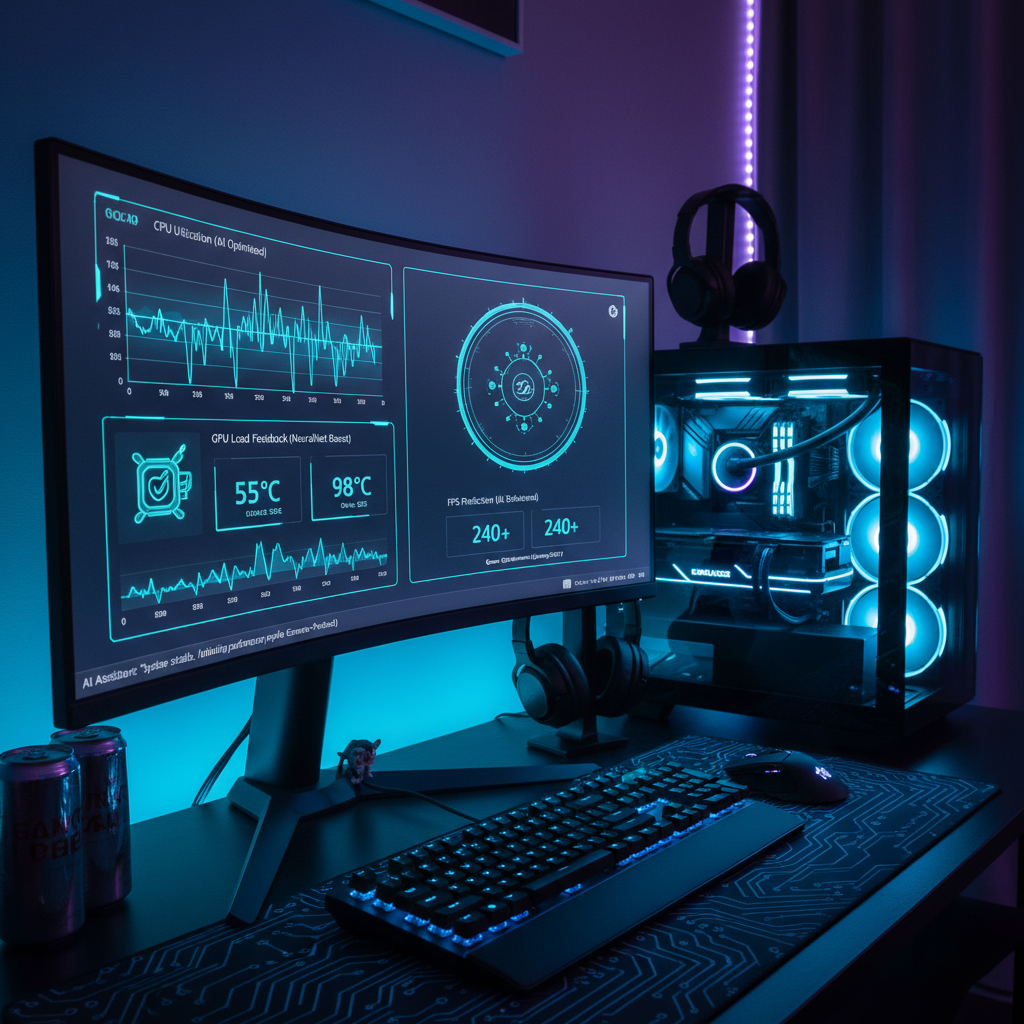
G-Assist offers multiple innovative features that help make gaming more efficient. Users have the ability to ask broad questions like "How does DLSS Frame Generation work?" , and receive informative, AI-driven responses. The AI feature extends its functionality to control detailed system-level configurations. G-Assist activation enables gamers to access immediate system operation analyses with performance metrics displayed in dynamic data charts.
The AI system has the capability to modify game settings and enable different features which leads to advanced automated optimization solutions. G-Assist allows performance enthusiasts to overclock their GPUs while providing estimated performance improvements to ease the intricate process.
The public release demonstrates potential with its features, but does not yet reach the level of integration found in last year's demonstrations, which showed G-Assist delivering in-game assistance. This more immersive level of integration is presently limited to a small selection of titles, with Ark: Survival Evolved being a key example. Nvidia has expanded the capabilities of G-Assist by allowing it to work with third-party plugins.
The AI assistant maintains communication capabilities with peripherals developed by Logitech G, Corsair, MSI, and Nanoleaf to enable functionalities like thermal profile adjustments and LED lighting synchronization, which expand AI control past fundamental system settings.
System Requirements and Performance Analysis
Nvidia aims to showcase the advanced AI processing power available in desktop systems with dedicated GPUs as "AI laptops" become more prevalent in the PC market. Nvidia's G-Assist differentiates itself from other cloud-based AI tools by utilizing local processing through the computational power of GeForce RTX graphics cards. The design of G-Assist by Nvidia incorporates a small language model optimized for local execution, which provides users with quicker response times and improved privacy protection.
The basic text installation needs 3GB of storage space while the voice control feature requires an additional 3.5GB resulting in a total storage requirement of 6.5GB. To operate G-Assist you need a GeForce RTX 30 series GPU or newer with a minimum of 12GB VRAM. The system's performance depends on the GPU's capabilities while future versions will include support for laptop GPUs.
Operating G-Assist locally on the GPU introduces several benefits alongside various challenges. Local processing provides advantages, including enhanced privacy protections and lower latency, which results in faster user interactions. However, it also introduces performance considerations. GPU utilization rose noticeably when G-Assist was activated during an RTX 4070 test session. Running AI inference processes to generate responses can affect the performance of other tasks, especially when running demanding games.
The use of G-Assist processing while playing Baldur's Gate 3 at full graphical settings resulted in frame rates decreasing by around 20%. G-Assist has the potential to worsen performance bottlenecks when used on systems that are already running close to their maximum performance capacity. G-Assist performs better when not running demanding games, yet requires a powerful GPU for heavy and continuous use.
Looking Ahead: The Future of AI in Gaming
G-Assist demonstrates its experimental status through frequent performance slowdowns and bug occurrences. At present stages manual configuration of system and game settings continues to provide the best solution for the majority of users. G-Assist marks an important development towards utilizing AI processing capabilities in gaming PCs, which suggests GPUs could deliver broader interactive experiences in the future.
The continuous progress of GPU technology makes it more feasible to combine demanding games with complex AI models through seamless integration. Nvidia's G-Assist technology currently provides an interesting but evolving preview into AI's future role in gaming.